
Introduction
The Middle East and Africa water desalination equipment market has been witnessing substantial growth, primarily driven by the region’s persistent water scarcity challenges and increasing population demands. With limited freshwater resources and rising industrial and residential needs, desalination has become one of the most critical solutions for ensuring sustainable water supply. The adoption of water desalination equipment has expanded significantly across the Gulf countries, North Africa, and other parts of the region, positioning it as a key market for future infrastructure and environmental investments.
This report provides an in-depth analysis of the Middle East and Africa water desalination equipment market, highlighting its key drivers, challenges, technological innovations, and regional outlook. As climate change intensifies the challenges of water availability, desalination technologies are expected to play a transformative role in addressing the region’s water security needs.
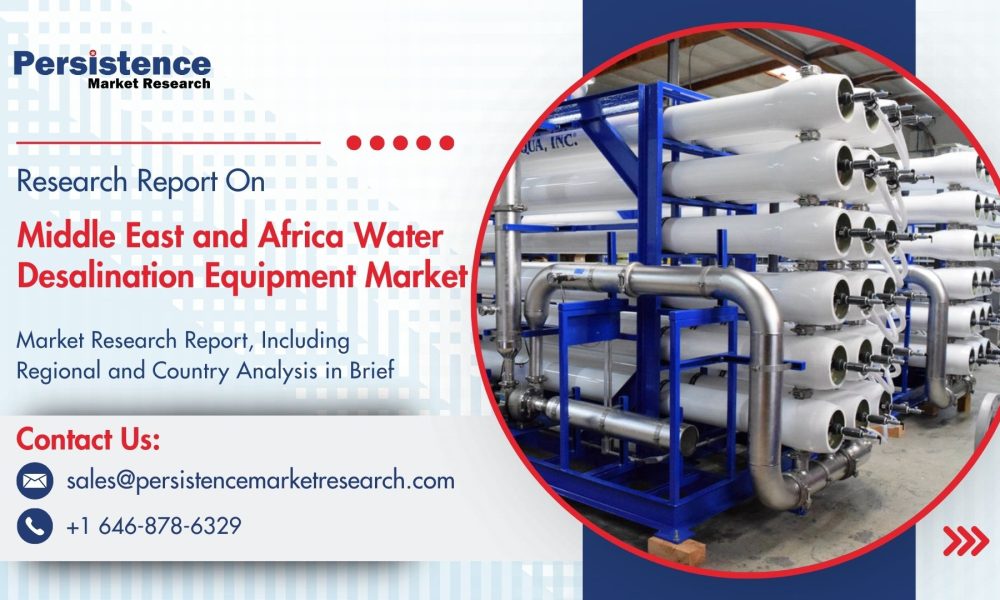
Water desalination equipment includes machinery and systems designed to remove salts and other impurities from seawater or brackish water, converting it into freshwater suitable for drinking, irrigation, and industrial applications. Countries across the Middle East and Africa are investing heavily in desalination projects to ensure long-term sustainability, reduce reliance on groundwater, and support urbanization and industrial expansion.
Market Projections and Forecast
According to Persistence Market Research’s projections, the Middle East and Africa water desalination equipment market is projected to reach a size of US$ 5.1 billion in 2025. The industry is anticipated to surge at a CAGR of 7.8% during the forecast period, attaining a value of US$ 8.7 billion by 2032.
This growth is being fueled by an increasing number of government-backed desalination projects, rising energy-efficient equipment demand, and technological advancements such as reverse osmosis (RO) and hybrid systems. With Saudi Arabia, the UAE, and South Africa taking leading roles, the market is set to expand significantly, both in capacity and in scope of applications across residential, municipal, and industrial sectors.
Get a Sample PDF Brochure of the Report (Use Corporate Email ID for a Quick Response): https://www.persistencemarketresearch.com/samples/35084
Market Dynamics
Drivers of Market Growth
- Rising Water Scarcity in the Region
The Middle East and Africa are among the most water-stressed regions in the world. With extremely low renewable freshwater availability, the demand for desalination equipment is soaring. Governments are prioritizing desalination as a key strategy to ensure a reliable supply of potable water, particularly in Gulf countries such as Saudi Arabia, the UAE, and Qatar. - Population Growth and Urbanization
Rapid population growth and urban expansion are intensifying the pressure on existing water resources. As cities expand and new industrial hubs emerge, demand for desalinated water is expected to rise significantly, pushing investments in desalination plants and equipment. - Government Investments and Policy Support
Governments across the region are heavily investing in desalination infrastructure as part of their national water strategies. For instance, Saudi Arabia and the UAE have announced multi-billion-dollar desalination projects under Vision 2030 and similar programs. Subsidies, partnerships with private players, and public-private collaborations are further supporting market growth. - Technological Advancements in Desalination Equipment
Modern desalination equipment offers higher efficiency and lower operational costs compared to traditional methods. Innovations such as energy recovery devices, solar-powered desalination, and hybrid technologies are making desalination more sustainable, reducing both costs and environmental impacts.
Challenges in the Market
- High Capital and Operating Costs
The installation and maintenance of desalination equipment involve significant financial investment. While operational efficiency has improved with new technologies, the high costs still pose a barrier, especially for low-income countries in Africa. - Environmental Concerns
Brine disposal and energy consumption are two major environmental challenges associated with desalination. The discharge of concentrated brine into oceans can affect marine ecosystems, while fossil-fuel-based desalination plants contribute to carbon emissions. - Unequal Access Across the Region
While Gulf countries have made major strides in desalination adoption, several African nations still face barriers due to financial constraints, limited technological capabilities, and political instability. Bridging this gap remains a challenge for the industry.
Market Trends and Technological Innovations
- Growing Adoption of Reverse Osmosis (RO) Technology
RO has emerged as the dominant desalination technology in the region, offering lower energy consumption and higher efficiency compared to thermal desalination methods like multi-stage flash (MSF). This trend is expected to accelerate as more plants transition to RO-based systems. - Integration of Renewable Energy in Desalination
Solar-powered and wind-powered desalination systems are gaining attention as governments and private players look to reduce energy costs and environmental footprints. Hybrid models combining RO with renewable energy sources are expected to play a significant role in the coming years. - Public-Private Partnerships (PPPs)
Increasingly, governments are collaborating with private companies to finance and operate desalination plants. PPP models are helping reduce financial burdens on governments while ensuring the efficient implementation of projects. - Focus on Modular and Decentralized Solutions
Smaller, modular desalination systems are being adopted in remote or rural areas to provide localized water supply. These systems are cost-effective and easier to deploy compared to large-scale centralized plants.
Water Desalination Equipment Industry Segmentation
By Technology:
- Reverse Osmosis (RO)
- Multi-Stage Flash (MSF) Distillation
- Multi-Effect Distillation (MED)
- Electrodialysis (ED)
- Others
By Application:
- Municipal
- Industrial
- Residential
By Equipment Type:
- Pumps and Motors
- Membranes
- Evaporators
- Filters
- Energy Recovery Devices
- Others
By Region:
- Middle East
- Africa
Regional Analysis
Middle East
The Middle East dominates the water desalination equipment market, accounting for the majority of installed desalination capacity worldwide. Saudi Arabia, the UAE, and Qatar are leading players, investing heavily in mega-desalination projects. Saudi Arabia alone contributes more than 20% of global desalination capacity, and its Vision 2030 initiatives aim to further expand the use of RO and renewable-powered desalination plants.
Africa
Africa is an emerging market for desalination equipment, with South Africa, Egypt, and Morocco leading adoption. Water scarcity caused by droughts and limited freshwater resources is pushing governments to adopt desalination solutions. However, challenges such as high costs, limited infrastructure, and financing issues remain barriers to widespread adoption in sub-Saharan Africa.
Key Companies Profiled in the Report
- Veolia Environnement S.A.
- Doosan Heavy Industries & Construction Co., Ltd.
- Suez SA
- IDE Technologies Ltd.
- Abengoa S.A.
- Acciona S.A.
- Toray Industries, Inc.
- General Electric (GE) Water & Process Technologies
- Fisia Italimpianti S.p.A.
- Aquatech International LLC
Future Outlook
The Middle East and Africa water desalination equipment market is poised for strong growth over the next decade, with governments and private players heavily investing in advanced desalination technologies. Reverse osmosis and renewable-powered systems will dominate future developments, helping reduce costs and environmental impacts.
The increasing use of PPP models, along with the rising emphasis on modular systems for remote areas, will open new opportunities in the market. While environmental and financial challenges remain, ongoing research into sustainable brine disposal and energy-efficient equipment is expected to address these concerns.
With Saudi Arabia, the UAE, and South Africa leading the charge, and other nations gradually adopting desalination as a strategic necessity, the market is set for a transformative phase. By 2032, desalination will be at the heart of water management strategies across the Middle East and Africa.
Conclusion
The Middle East and Africa water desalination equipment market is experiencing rapid growth, driven by increasing water scarcity, population growth, and government-backed investments. Although high costs and environmental challenges present hurdles, technological advancements in RO systems, energy recovery devices, and renewable-powered desalination are addressing many of these issues.
As the region continues to prioritize water security, desalination equipment will remain critical to ensuring sustainable water supplies. With a projected value of US$ 8.7 billion by 2032, the market is well-positioned for sustained expansion, offering significant opportunities for equipment manufacturers, investors, and governments to collaborate in shaping a water-secure future.
Explore the Latest Trending Research Reports:




